
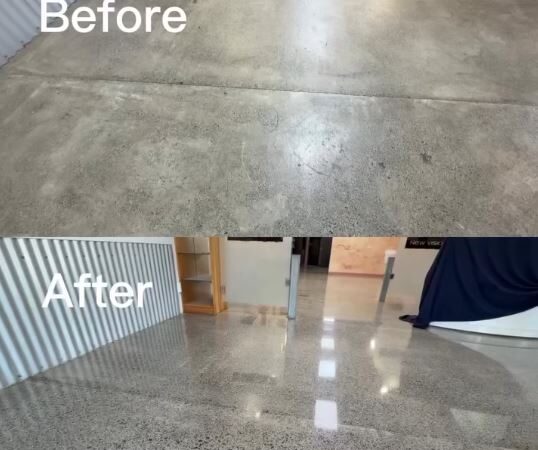
Polished concrete floors have become one of the most sought-after flooring finishes in modern New Zealand homes — and for good reason. They’re timeless, low maintenance, allergy friendly, and suit everything from high-end architectural homes to relaxed coastal builds.
But here’s the truth most people don’t realise:
A polished concrete floor is largely decided before the concrete is even poured.
At NZ Grinders, one of the biggest misconceptions we see is homeowners thinking that to get polished concrete, we simply put “a coating” on the concrete that gets applied towards the end of the building process. It isn’t. In most cases, we are revealing and refining the actual concrete slab your house is built on.
That means the quality of the concrete placement matters enormously.
The Biggest Mistake NZ Homeowners Make
The most common mistake we see is people deciding they want polished concrete after the slab has already been poured.
Unfortunately, not every concrete slab is suitable for every polished finish.
If the slab wasn’t poured specifically with polishing in mind, you may not achieve the finish you imagined from Pinterest or architectural magazines. In many cases, the best achievable result becomes a medium or full stone exposure finish because the surface may not be suitable for a marble-style finish.
That doesn’t mean the floor won’t look amazing — some of the most beautiful floors we’ve completed have been full stone exposure floors — but expectations need to match the slab itself.
Polished concrete is a natural material. No two floors are ever the same.
Understanding The Different Types Of Polished Concrete
This is where a lot of confusion happens.
Grind & Seal
A grind and seal involves grinding the surface flat and then applying a topical coating over the top to create the sheen.
The easiest way to explain it is like nail polish lacquer sitting on top of the concrete. The shine comes from the coating itself.
These systems can look fantastic and are often more cost effective upfront, but they rely on coatings rather than the concrete itself producing the shine.
Mechanically Polished Concrete
This is the premium, long-term polishing process.
Instead of relying on coatings, the concrete itself is polished using progressively finer diamond tooling — similar in concept to polishing stone with finer and finer sandpaper grits.
The stones within the concrete become the feature and the actual surface develops the shine naturally through refinement.
This is the type of polished concrete floor we believe creates the most timeless look in New Zealand homes.
Marble Surface Finish
A marble surface finish is very different again.
This finish involves no grinding exposure. Instead, the existing concrete surface is refined and polished using resin tooling to create a smooth, elegant appearance while retaining the natural surface cream.
These finishes can look stunning — but they require excellent concrete placement from the start.
Marble Surface vs Full Stone Exposure
Homeowners are often surprised to learn they cannot simply choose whichever exposure they like after the slab is poured.
The concrete itself decides a lot of that.
If the slab hasn’t been poured specifically for a marble-style finish, polishing will expose inconsistencies, imperfections, or poor placement on the surface. In those situations, a salt-and-pepper, medium, or full stone exposure often becomes the better-looking result.
And honestly? Full stone exposure done properly looks incredible in New Zealand homes.
Natural aggregate, river stones, and exposed textures create a floor that feels architectural, timeless, and uniquely connected to the landscape.
The Secret To A Great Polished Concrete Floor
People often ask us:
“What does a good slab look like before polishing?”
The truth is — visually, sometimes you simply can’t tell.
We’ve seen slabs that looked average come up beautifully, and slabs that looked promising disappoint once grinding starts.
That’s why the single biggest factor is using an experienced concrete placer.
Before pouring your slab, we strongly recommend:
- Viewing examples of the placer’s previous work
- Discussing polished concrete before the pour
- Understanding what exposure level is realistically achievable
- Keeping the slab clean during placement
- Managing expectations around natural variation
One issue we regularly encounter is builders failing to clean polystyrene off the site before the pour.
The polystyrene floats upward through the concrete and contaminates the surface. Later, during grinding, these areas must be burnt out and filled — leaving visible repairs that affect the finished appearance.
This is why polished concrete requires the entire build team to care about the final outcome from day one.
You Can Customise The Concrete Itself
One of the most exciting parts of polished concrete is that the slab itself can become part of the home’s design story.
We’re seeing more New Zealand homes move away from cold greys and toward warmer cream tones — especially with modern Mediterranean and contemporary farmhouse styles becoming popular.
Adding a cream oxide to the concrete while leaving the natural grey stones exposed can create an absolutely stunning result.
Clients can also customise the concrete mix itself with:
- River stones
- Coloured glass
- Reflective aggregates
- Shells
- Decorative stone blends
The key is matching the materials to the environment around the home.
For example:
- River stones can look incredible in rural or lakeside homes
- Shells may suit coastal builds
- Stark natural aggregate works beautifully in alpine or architectural mountain homes
What Finish Suits Different NZ Homes?
In our opinion:
- Full stone exposure suits highly architectural designer homes exceptionally well
- Salt-and-pepper finishes often feel softer and more relaxed in beach environments
- Matte finishes are becoming far more popular in residential homes
- High gloss still works brilliantly in commercial environments like supermarkets and retail stores
Personally, we believe matte or semi-gloss full stone exposure in natural concrete is one of the most timeless flooring finishes available in New Zealand.
Are Polished Concrete Floors Cold?
This surprises people all the time.
Polished concrete floors generally maintain temperature very consistently year-round. In well-designed homes, they don’t feel cold the way many people expect.
Other benefits homeowners love include:
- Easy maintenance
- No harsh chemicals required
- Allergy friendly surfaces
- Dust doesn’t trap in fibres like carpet
- Extremely durable for families and pets
The only downside some people notice is acoustics. Large open spaces can feel echoey — but this is easily softened with rugs, furniture, curtains, and soft furnishings.
A Real NZ Grinders Project: Dannevirke Hair Salon
One of our favourite rejuvenation projects was an old hair salon floor in Dannevirke.
The floor had been ground years earlier using a single-head grinder and was covered in visible grind marks. Most people would have looked at it and assumed it was beyond saving.
But underneath was beautiful natural riverstone aggregate with incredible colours hidden beneath the surface.
Over three days, we completed a full rejuvenation across 133m² while the salon was shut, avoiding disruption to the business.
What was once dull and heavily worn became smooth, refined, and visually striking. Once polished properly, the natural river pebbles came alive and revealed the incredible character already sitting within the slab.
That’s one of the things we love most about polished concrete — every floor has its own personality hidden underneath.
Our Honest Advice Before You Pour
If you’re building a new home and want polished concrete, here’s our honest advice:
Find the best concrete placer you can.
Go and look at examples of their finished work in person.
Discuss polishing before the slab is poured, both with your builder and the concrete placer.
Understand that polished concrete is not a manufactured tile — it’s a natural finish created from the actual structure of your home.
And most importantly:
Accept that polished concrete will be perfectly imperfect.
There will be variation.
There will be character.
There may be imperfections.
That’s the beauty of natural materials.
At NZ Grinders, we often say:
“We are polishers, not miners.”
If the concrete placer has done a poor job, we cannot magically uncover perfection that isn’t there.
But when everything comes together properly — the right slab, the right exposure, the right polishing process — polished concrete creates one of the most timeless and beautiful flooring finishes available in New Zealand homes.
Thinking About Polished Concrete For Your New Home?
At NZ Grinders, we specialise in mechanically polished concrete floors throughout New Zealand, including full stone exposure, salt-and-pepper finishes, marble surface polishing, grind and seal systems, and concrete rejuvenation.
If you’re planning a new build, the best time to talk to us is before the concrete gets poured.
That single decision can completely change the final result.
Contact NZ Grinders today to discuss your polished concrete project.
Glen at 021-434-199, serving North Island cities, or reach Mike at 027-755-6672 for South Island regions,